Now as we are getting towards the end of the month into a new month the last thing that I would like to talk about in terms of dieting is portion sizing. Since January we have been talking about sugars, carbs , dieting and now portion sizing. The first question is how many of you actually take the time to do this? Portion sizing can seem a bit tedious to many people but it is actually is very important especially if you are trying to watch your weight or want to lose weight. As many of you know if you know if we do not do this the result will be overeating and weight gain.
For me I’ve been putting this into practice now more then ever because over the past two years I have gained a good amount of weight. The first tip that I would give when it comes to portion sizing is that in order to know what your portion size is you have to know what the serving size is. Well where do you find the serving size? I’m glad you asked! The serving size is found at the very top of a nutrition facts label. Your serving size tells you how much calories you will get out of one serving. Once you have figured out your serving size then you can portion size. Not everything comes with a nutrition facts label so you are going to have to do some extra research and there are a lot of apps that can track calories for you if your are unable to figure out the calorie and serving size. The next tip I would give is use your measuring tools to help you portion your food. For myself I used dry measuring cups to measure out most of my food. For example if the cereal box says 1 cup is the serving size I use my dry measuring cup to scoop it out not so bad!.
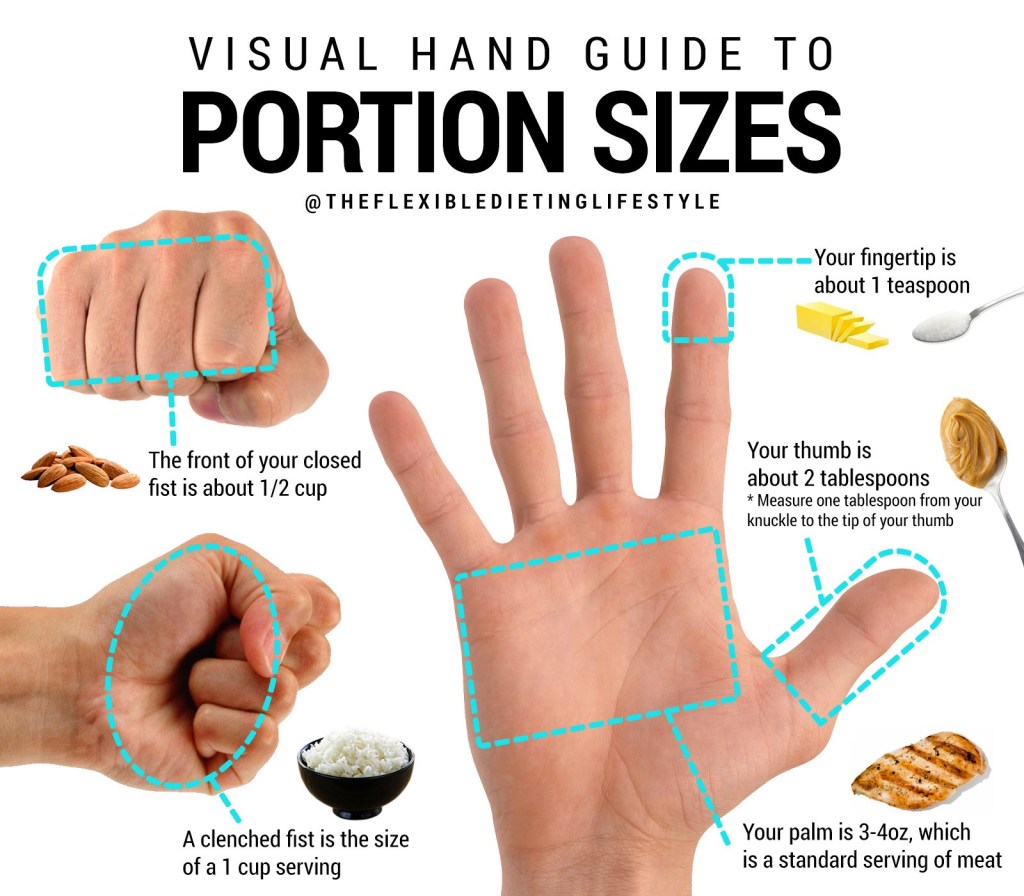
Now figuring out the portion sizes for other things such as meat and fish can be pretty tricky those things are usually measured by the ounce so I found some guides that use your hands to portion out your food. I will put that picture guide down below. Overall, portion sizing is really not that scary and easy to do so don’t run away from it be smart and portion!
I do not own this photo. This photo was found using a google search for free images
As I mentioned in my last blog post I would still be on the topic of diets. This week I am going to be taking about vegan diets and vegetarian diets.What both diets have in common is that they do not consume any animals products. Did you know that there are 5 types of vegan diets and 5 types of vegetarian diets but a vegan diet or “veganism” is also a vegetarian diet. So lets jump straight to it.
5 Types of Vegan Diets ( Remember Vegan diets to not use any animal products)
Junk- Food Vegans – Now I found this to very interesting because you wouldn’t think that someone that is vegan would eat “junk” food but there are a lot of vegan products that can still be considered unhealthy depending on what you choose such as vegan ice cream, vegan, fries, chips, frozen dinners
Raw-Food Vegans – These vegans only eat foods that are raw or cooked below 118 degrees F, some of those raw foods include: raw nuts and seeds, raw nut butters, raw nut milks, seaweed, and sauerkraut. Methods of cooking for those that are raw food vegans include juicing, blending, soaking, and sprouting they chose these methods of cooking because the foods lose less nutrients when cooked at a lower temperature.
Dietary Vegans- Dietary Vegans follow a plant based diet but other products such as for food, hair, or skin
Whole Food Vegans – These vegans eat whole foods such as nuts, fruits, vegetables , and legumes
Low Fat Raw Food Vegans- These vegans limit high fat as coconuts, nuts, and avocados and mostly eat fruits. They are referred to as fruitarians.
The next thing I am going to talk about are Vegetarian diets. There are 5 Vegetarian diets:
Vegan – I started off with vegan since we just reviewed vegan diets. As we know Vegans do not eat any animal or dairy products
Lacto-vegetarian – These vegetarians do not eat eggs, poultry, fish, or meat but they do eat dairy products such as yogurt, milk, cheese, and butter
Ovo-vegetarian – These vegetarians exclude all animal products but they do eat eggs
Lacto-ovo vegetarians – These vegetarians do not eat meat but they do eat eggs and milk
Pescatarians – Pescatarians do not eat meat, eggs , poultry, or dairy but they do eat fish
That is the overview of Vegan and Vegetarian diets, they both have many similarities but slight differences in what can actually be consumed. Do you currently follow any of these diets or lifestyles? Leave a comment down below let me know!
So it’s a New Year and right about now everyone is getting started on new diets (including me). Diets can be good but diets are also temporary most people will start a diet and fall off (which has also happened to me several times). So for me instead of using the word diet I like to use the word Lifestyle because you should want to your healthy eating habits to be a lifestyle with a room for certain foods in moderation or sometimes foods.
But being that it is a New Year this blog post is going to be about all about diets and some of the common diets that we hear about today. Now, there are a lot of diets out there but in this blog post I am only going to be talking about 5 diets which are:
The Vegan Diet
The Mediterranean Diet
The Paleo Diet
The DASH Diet
The Atkins Diet
The Vegan Diet is currently a favorite of mines because being someone that deals with acid reflux I realized following a vegan diet works better for it. Even though I am not fully vegan I buy a lot of vegan products whether its food and even for my body. So what exactly is Vegan? One a vegan diet it excludes anything that comes from animals. So almond milk, cashew milk, almond yogurt, non-dairy yogurt, tofu, fruits, and vegetables plus legumes all fall into the vegan category.
The Mediterranean Diet
Coronary Heart Disease has been a problem in America for many years. This type of diet is centered around just that. This diet was created to resemble the types of diets eaten in Greece and Italy or countries along the Mediterranean Sea. The way they would eat in these countries produced lower numbers in heart disease then here in the US. This diet is mostly a plant based diet eating lots of fruits and vegetables and healthy fats such as avocados and olive oils. You also focus on eating whole grains and limiting eating red meats and dairy but you can still eat meat and dairy just not in large amounts.
The Paleo Diet
The Paleo Diet was basically created to mimic the type of diets that hunters and gatherers/ early humans would eat. In this diet you would be eating lean meats such as , fish,fruits,veggies, seeds, and nuts. You can also have dairy products, legumes, and grains but have these in very limited amounts. This type of diet helps with weight loss and to maintain weight and is good for obesity, heart disease, and diabetes prevention.
The DASH Diet
Now I’m sure you guys have all probably heard of this diet. The DASH diet was created for people with hypertension. DASH means dietary approaches to stop hypertension. The main goal is to reduce the amount of sodium in your diet and eat more fruits and vegetables and grains. You can also still have dairy, meat, and fish.
The Atkins Diet
Last but not least is the Atkins Diet. When reviewing this at first I was a little confused. To start this diet is a low carb diet. This is the type of diet you go on when you want to lose weight and limit those carbs. This diet can also improve blood sugar levels and cholesterol levels. So while your reducing your carbs you are increasing your protein intake and that is what keeps you full and eating less. The confusing part for me was the 4 phases. So you have to make sure you keep up with the phases so that you are following this diet correctly.
Phase 1- This is called the induction. In this phase you must reduce your carb intake to less than 20 grams per day for two weeks.
Phase 2- This phase is called balancing. Find your balance thats the goal. You will slowly add nuts and low carb veggies such as zucchini’s, broccoli, cauliflower, and cucumbers.
Phase 3 – This phase is called fine tuning. In this phase you will begin adding back carbs until your weight loss slows down. Very Tricky!
Phase 4 – This phase is called maintenance. In this phase you eat as many carbs (healthy) carbs as possible without gaining weight.
Examples of some foods to avoid on this diet:
Sodas
Ice Cream
Fruit Juice
Rice
Barely
Canola Oil
Soybean Oil
Diet foods/Low fat foods
** When writing this blog a lot of it comes from prior knowledge of nutrition combined with viable resources for this blog post the source I used was www.healthline.com please visit healthline for more information on these diets**
Artificial sweeteners are better known as sugar substitutes. Better yet we can say products that state they are “sugar free”. We definitely see that a lot in our grocery stores and sometimes we think that sugar free is better which may not always be the case because some are not actually natural and are still processed made sugars.
Normally when we use a sweetener we are stopping ourselves from reaching for the good ole granulated sugar that normally get. People go for artificial sweeteners because they do not add calories to your diet and you can use less of it because it provides that sweetness faster than table sugar does. Another plus of using artificial sweeteners is that they do not cause tooth decay and cavities like granulated table does. Also it is a better alternative for those with diabetes and for those trying to lose weight
because they do not raise your blood sugar (carbohydrates).
The FDA regulates the use of artificial sweeteners and it is considered an food additive. So the FDA approves all artificial sweeteners before you see them on grocery shelves.
So whats the 411 on these sweeteners?
Aside the from artificial sweeteners we also have novel sweeteners and sugar alcohols which I just recently learned a little more about. One of the big novel sweeteners that we all have heard about is Stevia and as for sugar alcohols they are still considered carbohydrates because they are naturally found in some fruits and vegetables. Sugar alcohols is not like an alcoholic drink because it doesn’t contain ethanol but it does contain calories. Sugar alcohols do have a laxative effect when consumed in large amounts so you must keep that in mind.
The biggest talk when it comes to these sweeteners is that it is said that they can cause cancer but research has been done and for the most part most of these sweeteners have not been found to be harmful. The most important thing when it comes to sugar is how much of it do you consume and use on a daily basis and this determines how it will effect your health. Moderation is key when it comes to using sugar and moderation is key when it comes to nutrition.
Well guys , it is the holidays and Christmas is literally less than four days away Whew! I know with everything that has been happening in 2020 we are looking forward to the holidays. One thing some of us look forward to is having our SWEETS! Yes I said it SWEETS. For most of us it all really starts with Thanksgiving, and we are not usually working on our summer bodies at this time. I always have a sweet and a lot of the time I have to remind myself to get that under control and not go overboard. With that being said now I will let you know all the reasons why sugar is not your friend:
1. Too much sugar consumption leaves the door open for many diseases and disorders
2. Too much sugar in diet can cause you to crash and feel sluggish
3. Too much sugar in the diet opens the avenue to Type 2 Diabetes due to an excess in sugar in the body can lead to insulin resistance
4. More prone to cancer
5.Weight Gain
6. Heart Disease
7. Arthrosclerosis and so much more
Now that you know why sugar is not your friend , how are you going to work on limiting it in your diet? To start always read your nutritional facts label that is where you will find out how much sugar is in your food. Also keep in mind if a food item is more than one serving and you eat more than one you will consume more sugar per serving. Try other alternatives to sweetening your food such as honey, agave, and stevia. I’ve even heard now that there is coconut sugar ! It is recommended that men should have 37 grams or 9 teaspoons of sugar a day while women can have 25 grams or 6 teaspoons of sugar a day according to the American Heart Association. Now that is not a lot so you can see why controlling our sugar cravings is so important. Make sure this holiday not to splurge to much sweets but also enjoy what can in moderation. Happy Holidays! Stay Safe
Check out my Youtube Video on why Sugar is not your friend



 NutriFoody Wholly Holism