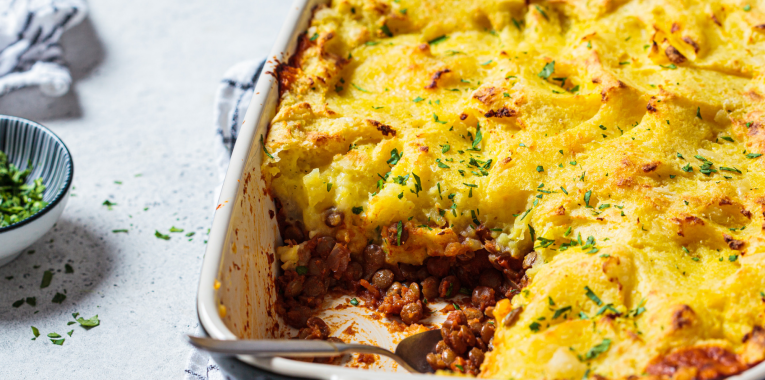
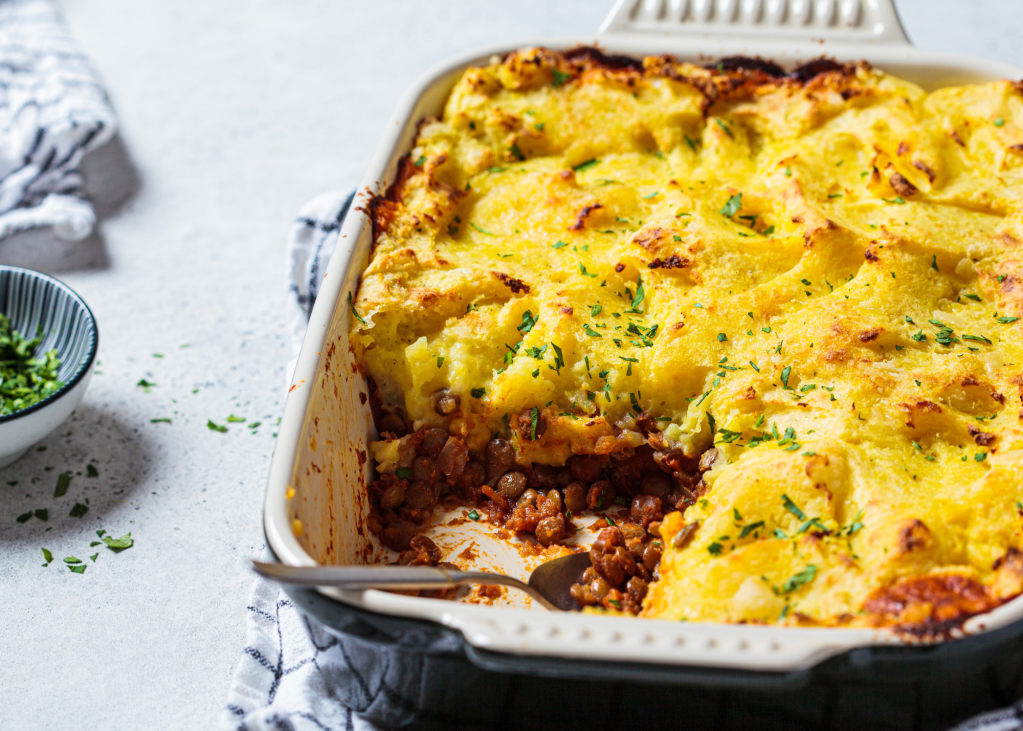
Cozy Lentil Shepherd’s Pie

In the realm of comforting meals, few dishes evoke the same sense of warmth and nostalgia as Shepherd’s Pie. Traditionally made with ground meat and topped with creamy mashed potatoes, this hearty dish has been a staple on dinner tables for generations. But what if we told you there’s a delicious vegetarian version that’s just as satisfying? Enter: Cozy Lentil Shepherd’s Pie.

This vegetarian twist on the classic Shepherd’s Pie is a celebration of wholesome ingredients and hearty flavors. By swapping out the meat for protein-rich lentils and loading up on vegetables, we’ve created a dish that’s not only delicious but also nutritious and comforting.


For the Lentil Filling:
– 1 cup dry green or brown lentils, rinsed and drained
– 2 cups vegetable broth
– 1 tablespoon olive oil
– 1 onion, diced
– 2 carrots, diced
– 2 celery stalks, diced
– 2 cloves garlic, minced
– 1 teaspoon dried thyme
– 1 teaspoon dried rosemary
– 1 teaspoon smoked paprika
– Salt and pepper to taste
– 1 cup frozen peas
– 1 cup corn kernels (fresh, frozen, or canned)
– 2 tablespoons tomato paste
– 2 tablespoons soy sauce or tamari
– 1 tablespoon Worcestershire sauce (optional)
– 2 tablespoons all-purpose flour (or gluten-free flour for GF version)
– 1 cup vegetable broth or water

For the Mashed Potato Topping:
– 2 lbs potatoes (such as Russet or Yukon Gold), peeled and diced
– 1/4 cup unsalted butter or vegan butter
– 1/2 cup milk (dairy or plant-based)
– Salt and pepper to taste

**Instructions:**

1. Preheat your oven to 400°F (200°C). Grease a 9×13-inch baking dish or a large oven-safe skillet.

2. In a medium saucepan, combine the lentils and vegetable broth. Bring to a boil, then reduce the heat to low, cover, and simmer for about 20-25 minutes, or until the lentils are tender but not mushy. Drain any excess liquid and set aside.

3. In a large skillet, heat the olive oil over medium heat. Add the diced onion, carrots, and celery. Cook for about 5-7 minutes, or until the vegetables are softened.

4. Add the minced garlic, dried thyme, dried rosemary, smoked paprika, salt, and pepper to the skillet. Cook for another 1-2 minutes, until fragrant.

5. Stir in the cooked lentils, frozen peas, corn kernels, tomato paste, soy sauce or tamari, and Worcestershire sauce (if using). Cook for 2-3 minutes, stirring occasionally.

6. In a small bowl, whisk together the flour and vegetable broth (or water) until smooth. Pour this mixture into the skillet with the lentil and vegetable filling. Stir well to combine, then simmer for 5-7 minutes, or until the mixture has thickened slightly. Remove from heat.

7. Meanwhile, cook the diced potatoes in a large pot of boiling water until tender, about 15-20 minutes. Drain the potatoes and return them to the pot.

8. Add the butter and milk to the pot with the cooked potatoes. Mash the potatoes until smooth and creamy. Season with salt and pepper to taste.

9. Transfer the lentil and vegetable filling to the prepared baking dish or skillet. Spread the mashed potatoes evenly over the top of the filling.

10. Place the baking dish or skillet in the preheated oven and bake for 25-30 minutes, or until the mashed potatoes are golden and the filling is bubbly around the edges.

11. Remove from the oven and let cool for a few minutes before serving. Enjoy your cozy Lentil Shepherd’s Pie!

This vegetarian twist on a classic comfort food dish is sure to warm you up on chilly evenings. Enjoy the hearty lentil and vegetable filling topped with creamy mashed potatoes for a satisfying and nutritious meal!

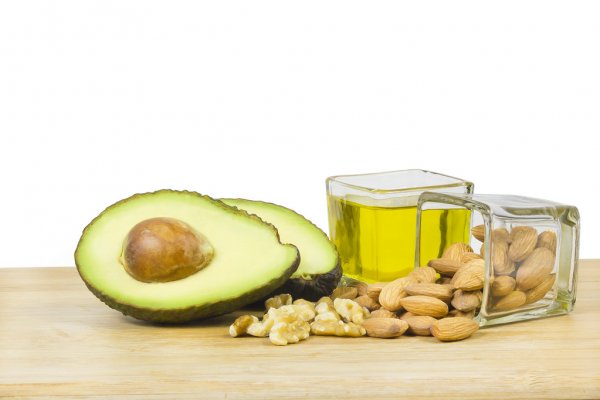
The Last of the Fats – OMEGAS

photo credit: google image search

Now I know you all are pretty familiar with Omegas in the diet . For a while the omega that I would hear about the most were omega 3’s but did you know that there is omega 3,6, and 9? I know right?! That’s a lot but no worries in this blog post I will give you the run down on these fabulous omegas.

First we will start with Omega 3’s:

  • Our bodies cannot make these types of fats we must get them in our diet or with supplementation
  • They are polyunsaturated fats (chemical makeup & bond)
  • Double Bonds
  • Many types of Omega 3’s, but the most common ones are EPA, DHA, and ALA
  • EPA is a 20 chain fatty acid
  • DHA is a 22 chain fatty acid
  • ALA is a 18 chain fatty acid
  • EPA helps reduce inflammation in the body, helps with symptoms of depression
  • DHA is important for brain development and function
  • ALA is good for the heart, immune, and nervous system

Food sources of omega 3’s are:

  • salmon
  • mackerel
  • chia seeds
  • walnuts
  • flaxseeds

Omega 6:

  • Also polyunsaturated with double bonds (chemical structure)
  • Called GLA
  • Can be found in some oils such as primrose  oil
  • Benefits include possibly reducing inflammation in the body and reducing fat mass but more research is needed

Food sources of omega 6’s are:

  • soybean oil
  • mayonnaise
  • walnuts
  • almonds
  • cashew nuts

Omega 9:

  • It is monounsaturated
  • Only has one double bond in chemical structure
  • Can be produced by the body
  • Oleic Acid is the most common omega 9 known
  • Health benefits include reducing inflammation and insulin sensitivity

Food sources of omega 9’s are: 

  • olive oil
  • almond oil
  • avocado oil
  • almonds
  • cashews
  • walnuts

Fat’s Overview – Let’s Talk About Fats

Image by Welcome to all and thank you for your visit ! ツ from Pixabay

Fats Overview – Let’s Talk About Fats

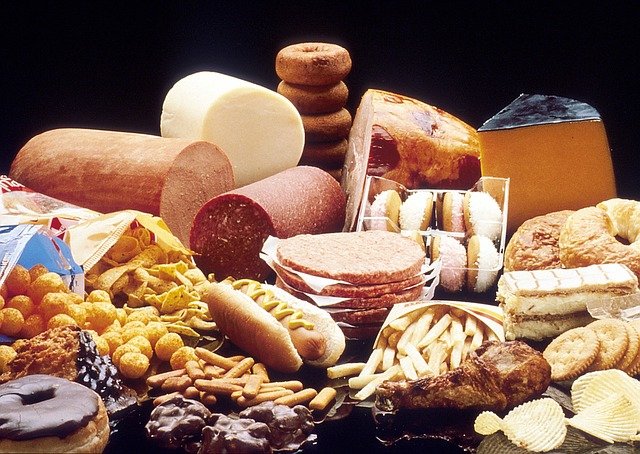
So what’s the deal with fats? Are fats really bad for you? The simple answer is yes and no. Just like how earlier in another blog post I talked about Carbohydrates the good and bad ones ( complex and simple) fats also had good and bad ones. Fats are considered one of our Macronutrients (Carbohydrates, Fats, and Proteins). You get nine kcals from fats per gram while with carbohydrates and proteins you only get 4 kcals per gram for each. So I know when we here the word fat when it comes to food we get scared but there is no reason to be its all about putting the right fats into your body.

So for the whole month of February we will be talking about fats. This first blog post is just an overview for what is to come in the next few weeks.

We are going to be talking about:

  • What are fats?
  • Why are fats good for us?
  • The good fats and the bad
  • Different fat categories such as saturated and unsaturated 
  • Cis and Trans Fats
  • Essential Fatty Acids
  • Where do fats go when it gets absorbed in the body?
Check out my Youtube Video on Fats

Why is sugar so bad? Sugar is not your friend

Photo by Polina Tankilevitch on Pexels.com

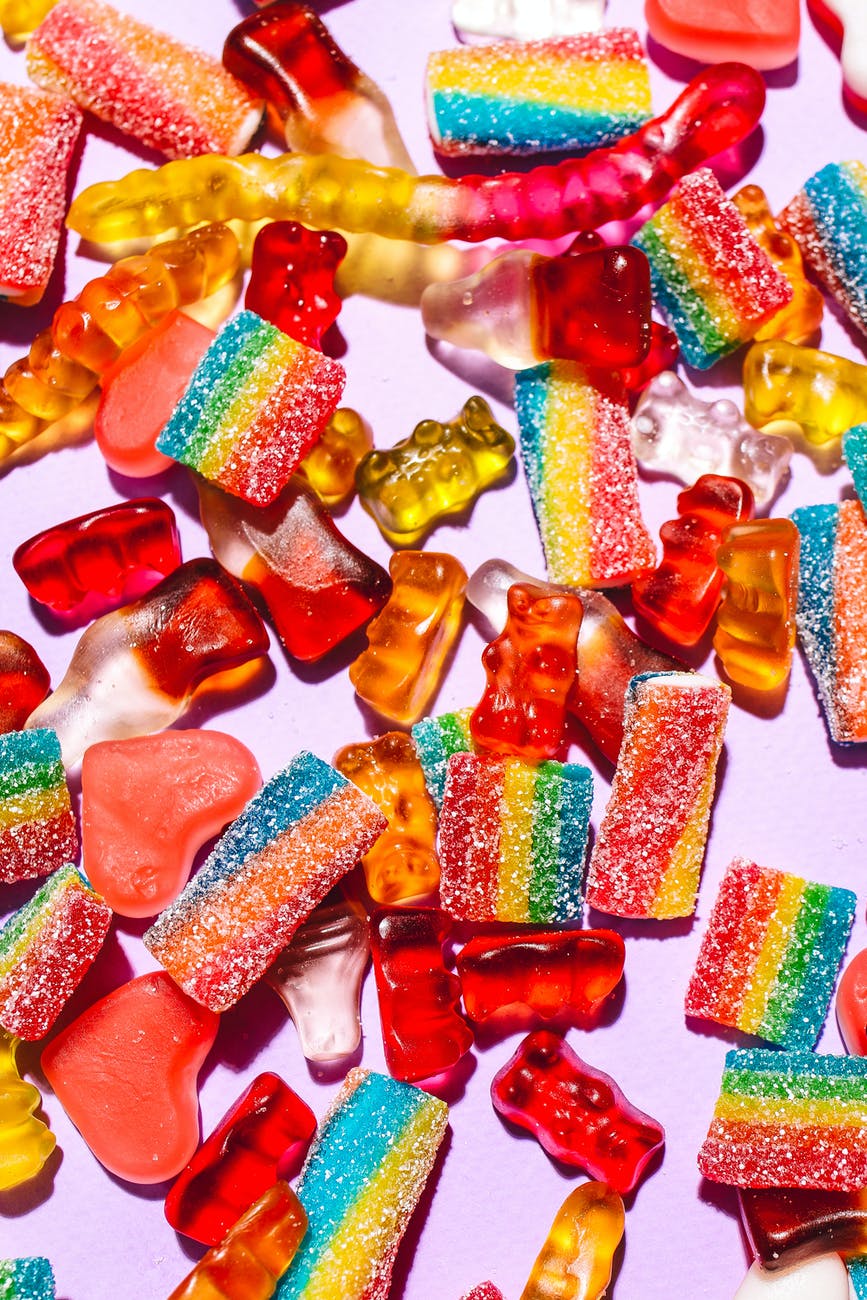
Well guys , it is the holidays and Christmas is literally less than four days away Whew! I know with everything that has been happening in 2020 we are looking forward to the holidays. One thing some of us look forward to is having our SWEETS! Yes I said it SWEETS. For most of us it all really starts with Thanksgiving, and we are not usually working on our summer bodies at this time. I always have a sweet and a lot of the time I have to remind myself to get that under control and not go overboard. With that being said now I will let you know all the reasons why sugar is not your friend:

1. Too much sugar consumption leaves the door open for many diseases and disorders

2.  Too much sugar in diet can cause you to crash and feel sluggish

3. Too much sugar in the diet opens the avenue to Type 2 Diabetes due to an excess in sugar in the body can lead to insulin resistance

4. More prone to cancer

5.Weight Gain

6. Heart Disease

7. Arthrosclerosis and so much more

Now that you know why sugar is not your friend , how are you going to work on limiting it in your diet? To start always read your nutritional facts label that is where you will find out how much sugar is in your food. Also keep in mind if a food item is more than one serving and you eat more than one you will consume more sugar per serving. Try other alternatives to sweetening your food such as honey, agave, and stevia. I’ve even heard now that there is coconut sugar ! It is recommended that men should have 37 grams or 9 teaspoons of sugar a day while women can have 25 grams or 6 teaspoons of sugar a day according to the American Heart Association. Now that is not a lot so you can see why controlling our sugar cravings is so important. Make sure this holiday not to splurge to much sweets but also enjoy what can in moderation. Happy Holidays! Stay Safe

Check out my Youtube Video on why Sugar is not your friend

Watch Now!

Blogmas Day 10 – Health and Wellness

Hey Everyone,

Lately on Youtube I have been seeing that everyone is doing Vlogmas and I love watching Vlogs. Since I am not on Youtube anymore and I am getting back into the groove of blogging I decided that I am going to do Blogmas! I thought that this would be interesting and get me used to writing more since I have been gone for a while. I am a bit late so I will be starting with day ten of Blogmas. I hope you all enjoy reading and Happy Holidays to All!

I say choose both because both are equally important and yes they both do mean different things. The real question I guess I want to ask is how well do we think we care of ourselves on a daily basis.  The definition of Health is “ the state of being free from disease or injury” and the definition of wellness is “ the state of being in good health, especially as an actively pursued goal” (see references below). 

Those definitions above is how health and wellness is defined by the World Health Organization but now I would like to break down how I view both. My definition of health goes beyond just the state of being free from disease or injury but it also deals with your mental health as well , how you think about yourself, how to do view the world or society, and how well do you cope in difficult life situations. I always viewed wellness as the ways in which you take care of yourself, such as eating right or a healthy balanced diet, being physically active, hygiene (hair , skin, and nails), and mental health such as yoga and meditation. All of these things are vital to us taking care of ourselves. 

It all starts with YOU. A lot of us carry habits from when we were younger into adulthood such as eating fast foods and many people do not know what it is like to exercise. I will admit I was never a big fan of exercising but as I entered into my mid 20’s my physical health changed and I became weaker. I also gained a lot of weight in my mid 20’s and when I did begin to exercise I struggled but it also felt so good. Every time that I would exercise and go to the gym it felt like my mind was being cleared and free. Then when I was diagnosed with LPR Acid Reflux that was the point that I started to take my nutrition health more seriously, even though I was studying nutrition sciences in school it took awhile for me to apply it towards myself.

Don’t wait until something happens to you to take care of yourself. Take preventive measures to make sure that you are in good health and maintaining homeostasis. Take control of your life and your health!

Reference Links:  

Definition of Health : https://www.who.int/about/who-we-are/constitution

Definition of Wellness: https://www.dictionary.com/browse/wellness