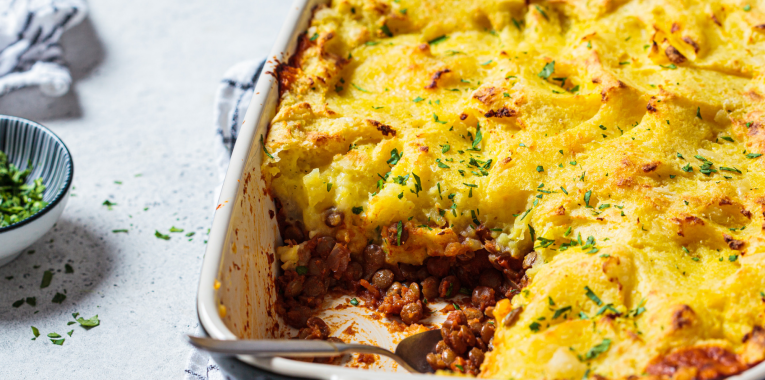
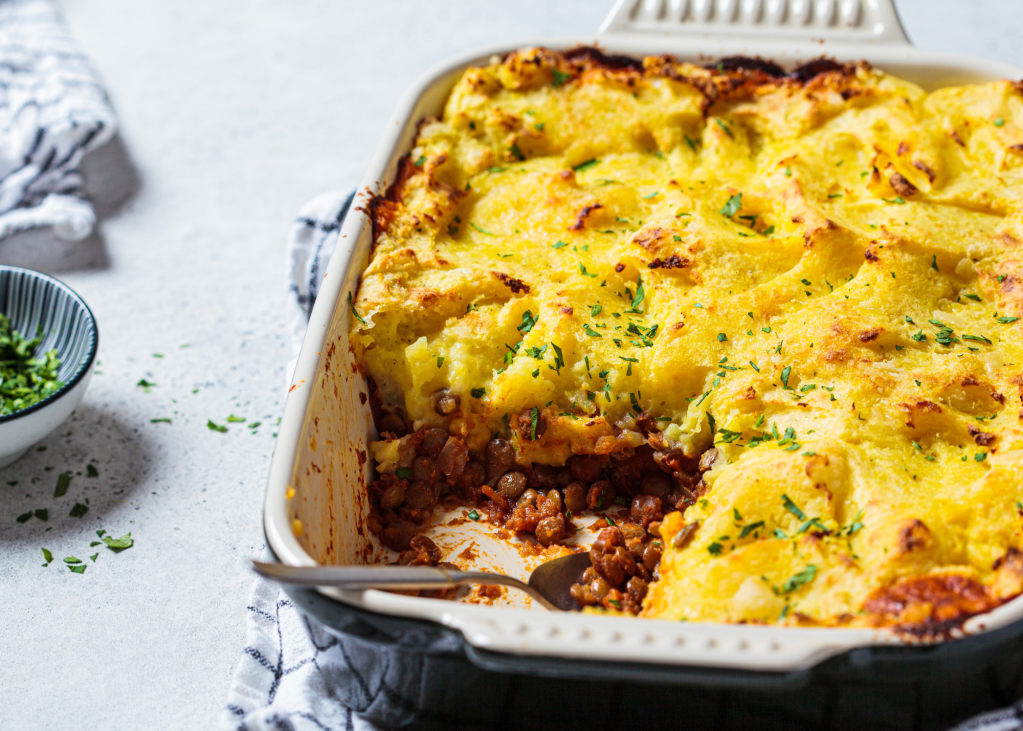
Cozy Lentil Shepherd’s Pie

In the realm of comforting meals, few dishes evoke the same sense of warmth and nostalgia as Shepherd’s Pie. Traditionally made with ground meat and topped with creamy mashed potatoes, this hearty dish has been a staple on dinner tables for generations. But what if we told you there’s a delicious vegetarian version that’s just as satisfying? Enter: Cozy Lentil Shepherd’s Pie.

This vegetarian twist on the classic Shepherd’s Pie is a celebration of wholesome ingredients and hearty flavors. By swapping out the meat for protein-rich lentils and loading up on vegetables, we’ve created a dish that’s not only delicious but also nutritious and comforting.


For the Lentil Filling:
– 1 cup dry green or brown lentils, rinsed and drained
– 2 cups vegetable broth
– 1 tablespoon olive oil
– 1 onion, diced
– 2 carrots, diced
– 2 celery stalks, diced
– 2 cloves garlic, minced
– 1 teaspoon dried thyme
– 1 teaspoon dried rosemary
– 1 teaspoon smoked paprika
– Salt and pepper to taste
– 1 cup frozen peas
– 1 cup corn kernels (fresh, frozen, or canned)
– 2 tablespoons tomato paste
– 2 tablespoons soy sauce or tamari
– 1 tablespoon Worcestershire sauce (optional)
– 2 tablespoons all-purpose flour (or gluten-free flour for GF version)
– 1 cup vegetable broth or water

For the Mashed Potato Topping:
– 2 lbs potatoes (such as Russet or Yukon Gold), peeled and diced
– 1/4 cup unsalted butter or vegan butter
– 1/2 cup milk (dairy or plant-based)
– Salt and pepper to taste

**Instructions:**

1. Preheat your oven to 400°F (200°C). Grease a 9×13-inch baking dish or a large oven-safe skillet.

2. In a medium saucepan, combine the lentils and vegetable broth. Bring to a boil, then reduce the heat to low, cover, and simmer for about 20-25 minutes, or until the lentils are tender but not mushy. Drain any excess liquid and set aside.

3. In a large skillet, heat the olive oil over medium heat. Add the diced onion, carrots, and celery. Cook for about 5-7 minutes, or until the vegetables are softened.

4. Add the minced garlic, dried thyme, dried rosemary, smoked paprika, salt, and pepper to the skillet. Cook for another 1-2 minutes, until fragrant.

5. Stir in the cooked lentils, frozen peas, corn kernels, tomato paste, soy sauce or tamari, and Worcestershire sauce (if using). Cook for 2-3 minutes, stirring occasionally.

6. In a small bowl, whisk together the flour and vegetable broth (or water) until smooth. Pour this mixture into the skillet with the lentil and vegetable filling. Stir well to combine, then simmer for 5-7 minutes, or until the mixture has thickened slightly. Remove from heat.

7. Meanwhile, cook the diced potatoes in a large pot of boiling water until tender, about 15-20 minutes. Drain the potatoes and return them to the pot.

8. Add the butter and milk to the pot with the cooked potatoes. Mash the potatoes until smooth and creamy. Season with salt and pepper to taste.

9. Transfer the lentil and vegetable filling to the prepared baking dish or skillet. Spread the mashed potatoes evenly over the top of the filling.

10. Place the baking dish or skillet in the preheated oven and bake for 25-30 minutes, or until the mashed potatoes are golden and the filling is bubbly around the edges.

11. Remove from the oven and let cool for a few minutes before serving. Enjoy your cozy Lentil Shepherd’s Pie!

This vegetarian twist on a classic comfort food dish is sure to warm you up on chilly evenings. Enjoy the hearty lentil and vegetable filling topped with creamy mashed potatoes for a satisfying and nutritious meal!


Let’s Recap!

Nutrition Recap For February and March

So for the month of February and March on this blog and on Youtube my focus  was on Heart Health and Women’s Health. The month of February in the US is Heart Health Month and the month of March is Women’s History Month . I will leave the links below to the Youtube videos I did for February and March.

Now that we are in April, I just wanted to give a recap of some of the diseases and disorders that I discussed and nutrition recommendations for those diseases and disorders. ( Disclaimer I work in the field of Nursing and Nutrition but I am not a Medical Doctor. When making any major changes to your diet or health please consult with your primary care doctor or a Registered Dietitian).

  1. Multiple Sclerosis 
  • Disease of the central nervous system 
  • Central nervous system includes the brain and spinal or cord
  • Attacks the nerves or nerve cells 
  • Myelin sheath deteriorates
  • Myelin sheath helps nerve signals travel and covers the nerve cell
  • Sensory Motor and Cognitive Problems
  • Cause is unknown 
  • Linked to genetic and environmental factors
  • Genetic being a female and Certain Genes
  • Environmental factors infections and Vitamin D deficiency 
  • Four types of MS
  • vision problems
  • tingling and numbness
  • pains and spasms
  • weakness or fatigue
  • balance problems or dizziness
  • bladder issues
  • sexual dysfunction
  • cognitive problems

Nutrition for MS – There is some evidence that a diet low in saturated fats and supplemented by Omega-3 (from fatty fishes, cod-liver oil, or flaxseed oil) and Omega-6 (fatty acids from sunflower or safflower seed oil and possibly evening primrose oil) may have some benefit for people with MS.

Vitamin D is a hormone and has many functions in the body:

promotes the absorption of calcium, necessary for bone health

supports immune response to infections

helps to limit inflammation and regulate the immune system

Food sources of Vitamin D include oily fish (such as salmon or tuna), beef liver, egg yolks, pork, fortified foods such as milk and juices

Biotin is considered a form of vitamin B, and is a component of enzymes in the body that help break down certain substances. It also activates certain enzymes that help the body produce myelin – the substance wrapped around many nerves in the central nervous system. Biotin, also known as vitamin H, is usually obtained from food.

2. Cardiovascular Disease 

  • Can include any condition that affects the heart , blood vessels, hypertension , atherosclerosis, arteriolosclerosis , high blood pressure, blood clots
  • Heart diseases that affect women more than men include
  • Coronary microvascular disease (MVD) – a problem that affects the heart’s tiny arteries
  • Broken heart syndrome – extreme emotional stress leading to severe but often short-term heart muscle failure
  • Uncomfortable pressure, squeezing, fullness or pain in the center of your chest. It lasts more than a few minutes, or goes away and comes back.
  • Pain or discomfort in one or both arms, the back, neck, jaw or stomach.
  • Shortness of breath with or without chest discomfort.
  • Other signs such as breaking out in a cold sweat, nausea or lightheadedness

Nutrition for Cardiovascular Disease – Avoid junk foods, processed foods, fast foods. Stay away from saturated and trans fats. Eat fruits, vegetables, nuts, lean meats, fish such as salmon. Low Sodium Diet, Low Fat Diet/ Protein plus Fiber 

3. Lupus

  • Autoimmune Disease 
  • Inflammation and swelling takes place anywhere in the body and can attack any organ or organ system
  • Lupus affects everyone different some people might have mild symptoms and some people might have severe symptom
  • People will have flare ups and then go into remission 
  • Symptoms:
  • fatigue
  • fever frequent fevers
  • hair loss and hair thinning
  • rash butterfly shaped rash on cheek bones
  • pulmonary problems lungs can become inflamed and swollen 
  • kidney problems Inflammation of kidneys
  • swollen joints
  • gastrointestinal problems
  • thyroid problems
  • dry mouth and eyes

Nutrition for Lupus- Eat a well balanced diet with lots of fruits and vegetables and omega 3s Salmon, Tuna, Mackerel, and Sardine, Citrus fruits Vitamin C.

Avoid processed foods, junk foods, any foods that cause Inflammation in the body dairy is known to cause Inflammation in the body

Check out my YouTube Nutrition Coaching Videos: